

Walk into any well-run commercial property and one of the first things you notice, without necessarily thinking about it, is that the parking lot is organized, clear, and easy to navigate. Drivers know where to go, pedestrians know where to walk, and the whole operation flows without confusion.
That clarity does not happen by accident. It is the result of a properly designed and maintained striping layout. Parking lot striping is one of those elements of commercial property management that gets taken for granted when it is done well and creates real problems when it is neglected.
For commercial property owners and facility managers throughout the Bay Area, understanding striping, what it involves, when it needs attention, what materials work best, and what compliance requirements apply, is a practical necessity. This guide covers all of it.
Why Parking Lot Striping Matters More Than Appearance
Most property owners think of striping primarily as an appearance issue. A freshly striped lot looks professional and well-maintained. A faded, barely visible lot looks neglected. Both of those things are true, but striping goes well beyond aesthetics.
Properly designed and maintained striping serves several critical functions on a commercial property.

Traffic flow and safety. Clear directional markings, drive aisle delineation, and pedestrian crosswalk markings reduce confusion, minimize conflict between vehicles and pedestrians, and lower the risk of accidents on the property. A lot with faded or missing markings creates ambiguity that leads to erratic driving behavior and increased incident risk.
Parking capacity optimization. A well-designed striping layout maximizes the number of usable spaces within the available area while maintaining safe drive aisle widths and adequate space dimensions. Poor layouts waste space and reduce the lot’s effective capacity.
Legal compliance. Striping is directly tied to ADA accessibility compliance. Accessible spaces, access aisles, and the International Symbol of Accessibility painted on the surface must be present, correctly dimensioned, and clearly visible. Faded or missing ADA markings are a compliance violation regardless of whether the physical space is in the correct location.
Liability management. A clearly marked lot with visible fire lanes, no-parking zones, pedestrian crossings, and accessible spaces is a documented effort to maintain safe conditions on your property. Faded or missing markings that contribute to an accident or an ADA complaint create legal exposure that a well-maintained lot avoids.
Types of Parking Lot Striping
Not all striping is the same. The right material for your project depends on the surface being striped, the expected traffic, your budget, and how long you need the markings to last.
Water-Based Traffic Paint
Water-based traffic paint is the most widely used striping material for commercial parking lots. It is cost-effective, dries quickly, and performs well on both asphalt and concrete surfaces. Application is straightforward, which means most professional striping contractors can apply it efficiently on large lots.
The trade-off is longevity. Water-based paint on a busy commercial lot typically lasts two to three years before fading to the point where reapplication is needed. In high-traffic areas such as drive aisles, entry and exit points, and pedestrian crossings, wear can accelerate the timeline.
For most commercial parking lots, water-based traffic paint represents the best balance of cost and performance. It is the appropriate specification for routine striping refreshes on asphalt lots throughout the Bay Area.
Oil-Based Traffic Paint
Oil-based paint offers somewhat better durability than water-based formulations and tends to hold color longer under high-traffic conditions. However, it has longer dry times, stronger fumes during application, and carries more restrictive environmental handling requirements under California regulations.
For most Bay Area commercial applications, water-based paint has largely replaced oil-based formulations due to California’s VOC regulations and the improved performance of modern water-based products. Oil-based paint remains appropriate in certain heavy-duty applications where its durability advantage justifies the added complexity.
Thermoplastic Striping
Thermoplastic is a heat-applied material that bonds directly to the pavement surface as it cools. It is significantly more durable than paint, typically lasting five to seven years or more in commercial applications. Thermoplastic is thicker than paint, which gives it better visibility, particularly in low-light conditions, and makes it more resistant to wear from vehicle tires.

The trade-off is cost. Thermoplastic application requires specialized equipment and is more expensive per linear foot than paint. It is most commonly specified for high-wear areas such as pedestrian crosswalks, stop bars, directional arrows, and ADA markings where longevity and visibility are priorities.
For commercial properties with high pedestrian traffic, school campuses, medical facilities, and retail centers with frequent vehicle turnover, thermoplastic is worth the additional investment in key marking locations.
Epoxy and Polyurea Coatings
Epoxy and polyurea-based striping materials offer exceptional durability and chemical resistance. They are most commonly used on concrete surfaces, parking structures, and industrial facilities where standard traffic paint does not hold up adequately. These materials require careful surface preparation and application conditions, and they are significantly more expensive than paint or thermoplastic.
For standard asphalt commercial parking lots, epoxy and polyurea striping is rarely the right specification. Their benefits are most realized in specific applications where the surface environment or traffic conditions make conventional materials impractical.
What a Complete Commercial Striping Layout Includes
A thorough commercial striping project covers more than just the parking stall lines. A complete layout includes all of the following elements, each of which serves a specific function in the safe and compliant operation of the lot.
Parking stall lines. The fundamental element of any striping layout. Standard commercial stall width is typically 9 feet, with drive aisle widths of 24 to 26 feet for two-way traffic. Stall dimensions should be verified against local requirements and optimized for the specific lot geometry.
Drive aisle markings. Directional arrows, one-way indicators, and stop bars guide traffic flow through the lot and reduce conflict points between vehicles. These markings are particularly important in complex lot layouts with multiple entry points and intersecting aisles.
ADA accessible spaces and access aisles. Correctly dimensioned accessible spaces, access aisles, and the International Symbol of Accessibility on the pavement surface are required elements. Van-accessible spaces require specific dimensional standards and must be identified with the appropriate surface marking. Access aisles must be diagonally striped to discourage parking in them.

Pedestrian crosswalks. Clearly marked crosswalks at pedestrian crossing points, particularly where foot traffic crosses drive aisles, are an important safety element and a liability management tool. High-visibility crosswalk markings, including ladder-style striping, provide better visibility than simple parallel lines.
Fire lanes. Fire lane markings are required by local fire codes on most commercial properties. Red curb painting, fire lane stenciling on the pavement surface, and signage requirements vary by jurisdiction. Bay Area municipalities have specific fire lane marking requirements that your contractor should be familiar with.
Reserved and designated spaces. Stall designations for reserved spaces, electric vehicle charging areas, loading zones, and other special-use areas should be clearly marked with appropriate stencils and signage.
Curb painting. Red curb painting for fire lanes and no-parking zones, blue curb identification for accessible spaces, and yellow curb markings for loading zones are all elements of a complete commercial lot striping project.
When Does Your Parking Lot Need Restriping?
Striping does not fail all at once. It fades gradually, which means many property managers underestimate how deteriorated their markings have become because the change happens incrementally. Here are the clear indicators that restriping is overdue.
Stall lines are no longer clearly visible from a standing height or from a moving vehicle approaching the lot. Drivers are parking inconsistently because the guidance is ambiguous.
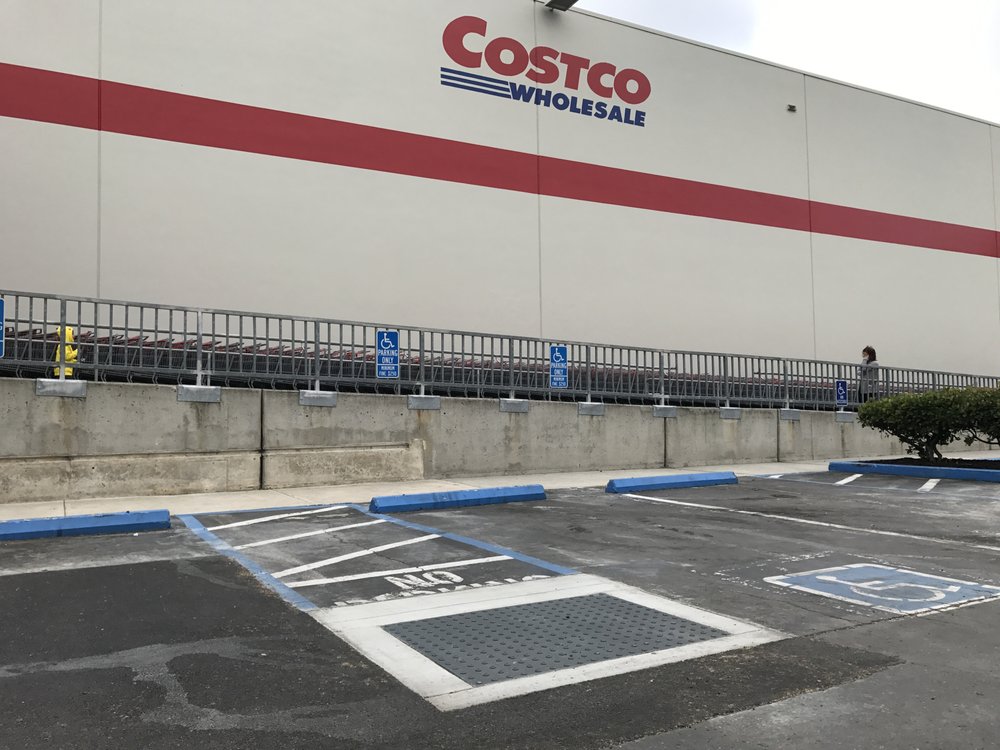
ADA markings, particularly the ISA symbol and access aisle boundaries, have faded to the point where they are not clearly legible. This is not just an appearance problem. It is a compliance issue.
Directional arrows and stop bars are no longer visible, contributing to erratic traffic patterns in the lot. Pedestrians are not following crosswalk paths because the markings are not visible enough to guide them.
Fire lane markings have faded significantly, creating potential issues with fire code compliance and emergency access.
The lot has recently been resurfaced or sealcoated and the existing markings are covered. Any resurfacing or sealcoating project requires complete restriping after the new surface has cured.
As a general rule, commercial parking lots should be restriped every two to three years. High-traffic properties may need attention more frequently. Lower-traffic lots may be able to extend the interval slightly, but regular inspection is the only reliable way to know when the markings have degraded enough to warrant reapplication.
The Striping Process: What to Expect
A professional commercial striping project follows a clear sequence that produces accurate, durable results.
Layout and Measurement
Before any paint is applied, the lot is measured and the layout is established. For a restripe of an existing layout, this involves confirming that the existing design is correct and compliant before reproducing it. For a new layout or a redesign, it involves calculating stall counts, drive aisle widths, ADA space placement, and traffic flow patterns.
This step matters more than most property owners realize. Restriping errors that reproduce a non-compliant layout create compliance problems that are costly to correct.
Surface Preparation
The surface must be clean and dry before striping begins. Dirt, debris, and moisture prevent proper paint adhesion and result in markings that peel or wash away prematurely. On freshly sealcoated surfaces, adequate cure time must be allowed before striping, typically 24 to 48 hours depending on temperature and humidity.
Layout Marking
Reference points are established across the lot using chalk lines and measurements. These reference points guide the striping machine operator to produce straight, evenly spaced lines at the correct dimensions.
Paint Application
Striping machines apply traffic paint at a consistent width and film thickness as they travel along the layout lines. Standard parking stall lines are typically four inches wide. Crosswalk markings, stop bars, and other specialty markings vary in width based on applicable standards.
Stencil Work
ADA symbols, directional arrows, fire lane stencils, and other specialty markings are applied using pre-cut stencils after the stall lines are complete. Stencil quality matters. Worn or poorly maintained stencils produce markings that look unprofessional and may not meet dimensional requirements.
Curb Painting
Red, blue, and yellow curb painting is typically completed as part of the overall striping project. Curb paint must be applied to a clean, dry surface and allowed to cure before traffic is permitted on adjacent areas.
Quality Review
A professional contractor walks the completed layout before leaving the site to verify that all markings are correct, straight, and complete. Any errors or omissions are corrected before the lot is returned to service.
Striping and ADA Compliance
ADA compliance intersects with striping in several important ways that commercial property owners need to understand.
The number of accessible spaces required depends on the total lot capacity, and those spaces must be correctly located, dimensioned, and marked. The International Symbol of Accessibility must be painted on the pavement surface at each accessible space and must be clearly visible. Access aisles must be diagonally striped and must connect to the accessible route leading to the building entrance.
Van-accessible spaces require specific surface markings identifying them as van-accessible in addition to the standard ISA marking. In California, signage requirements for accessible spaces are more specific than the federal ADA minimum, and those signage requirements are separate from but complementary to the surface striping.
Any restriping project should include a verification that the resulting layout meets current ADA and California Building Code requirements. Reproducing a non-compliant layout with fresh paint does not bring the lot into compliance. It just makes the non-compliant layout more visible.
What Does Parking Lot Striping Cost in the Bay Area?
Striping costs depend on the size of the lot, the complexity of the layout, the materials specified, and the amount of specialty work involved. For commercial lots in the Bay Area, typical pricing looks like this:
| Striping Element | Typical Cost |
|---|---|
| Standard parking stall line | $2 to $4 per stall |
| Directional arrow stencil | $15 to $30 per arrow |
| ADA ISA symbol stencil | $25 to $50 per symbol |
| Pedestrian crosswalk | $75 to $200 per crosswalk |
| Fire lane stencil | $20 to $40 per stencil |
| Red curb painting | $1.50 to $3.00 per linear foot |
| Full lot restripe (100 spaces) | $800 to $2,000 |
| Full lot restripe (300 spaces) | $2,000 to $5,000 |
These figures reflect standard water-based traffic paint. Thermoplastic markings carry a premium of roughly two to three times the cost of paint for equivalent coverage, reflecting the material and equipment costs involved.
Striping represents a modest investment relative to the value it delivers in safety, compliance, and property appearance. Deferring restriping to save money is rarely a sound decision when the cost of a full lot restripe is weighed against the liability and compliance exposure of a faded lot.
Common Striping Mistakes on Commercial Properties
Restriping over existing markings without proper layout verification. Tracing over existing lines assumes the original layout was correct and compliant. If the original layout had errors, restriping reproduces those errors with fresh paint.
Using the wrong paint on a freshly sealcoated surface. Sealcoating must be fully cured before striping is applied. Striping too soon results in poor adhesion and markings that peel within weeks. A contractor who applies striping the same day as sealcoating is cutting corners.
Skipping ADA verification during restripe projects. Many restripe projects reproduce the existing layout without verifying that it meets current ADA requirements. Standards have been updated over the years, and a lot that was compliant when originally striped may not meet current requirements.
Inconsistent line widths and spacing. Striping applied at inconsistent widths or with uneven spacing looks unprofessional and can create stall dimension issues. This is typically a symptom of poorly maintained striping equipment or an inexperienced operator.
Neglecting specialty markings. Property owners sometimes restripe stall lines while leaving faded directional arrows, crosswalk markings, and fire lane stencils unaddressed. A partial restripe that addresses only the most visible elements while leaving others faded is not a complete maintenance effort.
Frequently Asked Questions
How long does parking lot striping last?
Standard water-based traffic paint on a commercial parking lot typically lasts two to three years before fading to the point where reapplication is needed. High-traffic areas may show wear faster. Thermoplastic markings last five to seven years or more. Sealcoating the lot on schedule helps preserve striping by protecting the surface the paint bonds to.
Can striping be done on a newly paved lot?
Yes, but timing matters. New asphalt needs adequate cure time before striping is applied. Most contractors recommend waiting at least 24 to 48 hours after paving before applying traffic paint, and longer in cooler or more humid conditions. Applying paint too soon on fresh asphalt results in poor adhesion and premature failure.
Does restriping require closing the parking lot?
Not necessarily. Traffic paint dries quickly under normal Bay Area conditions, typically 30 to 60 minutes for foot traffic and one to two hours before vehicle traffic should be permitted on freshly painted lines. A professional contractor can phase the work to keep portions of the lot operational, though complete closure for a period makes the work more efficient and reduces the risk of fresh paint being disturbed.
What is the difference between a new layout and a restripe?
A restripe reproduces an existing layout with fresh paint. A new layout involves redesigning the stall configuration, drive aisles, and traffic flow. New layouts are typically done when the lot has been reconfigured, when the existing layout is non-compliant, or when the property owner wants to maximize capacity or improve traffic flow. New layouts require more planning and measurement time than a straightforward restripe.
How do I know if my striping layout is ADA compliant?
The most reliable way is to have a qualified contractor evaluate your current layout against ADA and California Building Code requirements. Key factors include the number and location of accessible spaces, the dimensions of those spaces and their access aisles, the presence and visibility of required markings, and the connection of accessible spaces to a compliant accessible route. See our full guide on ADA Parking Lot Requirements for California Commercial Properties for more detail.
Should striping be included in every resurfacing project?
Yes. Any resurfacing or sealcoating project covers the existing striping, which must be completely reapplied after the new surface has cured. Striping should always be included in the project scope for any resurfacing or sealcoating work. A proposal that does not include restriping after resurfacing is an incomplete scope.
Get Your Parking Lot Striped Correctly — Contact Cato’s Paving
A professionally striped parking lot is safer, more organized, and more compliant than one with faded or missing markings. It also makes a better first impression on every tenant and customer who pulls into your property.
At Cato’s Paving, we provide complete commercial striping services throughout the San Francisco Bay Area including Oakland, San Jose, Hayward, Fremont, San Mateo, Livermore, San Ramon, and surrounding communities. Every striping project we complete includes layout verification, proper surface preparation, and quality materials applied by experienced crews.
Contact Cato’s Paving today to schedule your striping project or request a free on-site evaluation. We will assess your current layout, identify any compliance issues, and give you a clear proposal for getting your lot marked correctly.
📞 (510) 397-2677


