

Sealcoating is one of those maintenance items that commercial property owners either take seriously or skip entirely. The ones who skip it almost always regret it — not immediately, but five or ten years down the road when their parking lot needs resurfacing or reconstruction years ahead of schedule.
If you manage a commercial property in the Bay Area, understanding sealcoating is one of the most practical things you can do for your pavement investment. It’s not complicated, it’s not expensive relative to what it prevents, and when done on the right schedule with the right materials, it meaningfully extends the life of your asphalt.
This guide covers everything you need to know: how often to sealcoat, when to start, what affects the timing, what the process involves, and what to watch out for when hiring a contractor.
What Is Commercial Sealcoating?
Sealcoating is the application of a protective liquid coating over an existing asphalt surface. The sealer fills surface pores, creates a barrier against UV radiation and water infiltration, and restores the dark appearance of weathered asphalt.
It is not a structural repair. Sealcoating does not fix cracks, fill potholes, or restore a failing base. It is a preventive treatment applied to asphalt that is in reasonably good condition — and its purpose is to keep that asphalt in good condition for as long as possible.
Think of it as similar to painting a deck or sealing a driveway. You’re not fixing damage — you’re protecting the material from the elements so damage develops more slowly.
For commercial parking lots, two sealcoating materials are commonly used:
Coal tar sealer is highly durable and resistant to fuel and oil spills. It provides excellent protection and a deep black finish. However, coal tar contains polycyclic aromatic hydrocarbons (PAHs) and is restricted or banned in several California municipalities. Confirm local regulations before specifying this product.
Asphalt-based sealer is the more widely used option for commercial properties in California. It provides good UV and water protection, is compatible with hot-mix asphalt, and does not carry the environmental concerns associated with coal tar. Quality varies significantly between products, so material selection matters.
A reputable contractor will use a commercial-grade sealer appropriate for your lot’s traffic loads and local regulations, applied at the manufacturer’s recommended coverage rate.
How Often Should You Sealcoat a Commercial Parking Lot?
For most commercial parking lots in the Bay Area, sealcoating every three to four years is the appropriate interval.
That said, the right timing for your specific property depends on several factors. Some lots benefit from sealcoating every three years. Others in lower-traffic, more shaded locations can go four to five years between applications without significant consequence. The key is not following a rigid calendar but rather understanding the factors that affect your lot’s specific needs.
Here is the framework most paving professionals use:
- High-traffic commercial lots (retail centers, medical facilities, busy office complexes): every two to three years
- Moderate-traffic lots (office parks, HOA communities, light industrial): every three to four years
- Low-traffic lots (storage facilities, occasional-use properties): every four to five years
Do not sealcoat more frequently than every two years. Over-application creates a thick, brittle sealer layer that peels, flakes, and tracks into buildings. More is not better with sealcoating — the right amount applied at the right interval is what delivers results.
When Should You Sealcoat a New Parking Lot?
This is one of the most common questions we hear from property owners who have just had a new parking lot installed. The answer surprises some people: wait 12 to 18 months before applying the first coat of sealer.
New asphalt needs time to cure fully. During the first year, the asphalt binder off-gasses and the pavement undergoes a natural hardening process. Applying sealer too early traps oils in the surface, prevents proper curing, and can actually soften the pavement rather than protect it.
Waiting 12 to 18 months allows the asphalt to cure completely before the first sealer application. After that initial coat, follow the three to four year cycle for subsequent applications.
What Affects Sealcoating Frequency?
Several variables determine how quickly your sealcoating wears and how often your lot needs reapplication. Understanding these helps you make smarter scheduling decisions.
Sun Exposure and UV Intensity
UV radiation is the primary driver of asphalt oxidation. Lots with significant direct sun exposure — particularly in sunnier inland areas of the Bay Area — experience faster binder degradation than shaded lots. Higher UV exposure means sealcoating provides more benefit and may need to be reapplied sooner.
Conversely, a lot with substantial shade from buildings or mature trees may be able to extend the interval between applications. However, shaded lots in areas with heavy tree canopy bring their own challenges — leaf debris, moisture retention, and root intrusion — that require attention regardless of sealcoating schedule.
Traffic Volume and Vehicle Type
Heavy traffic wears sealer faster than light traffic. A parking lot serving a busy retail center or medical facility in San Jose sees far more vehicle cycles per day than a small office park — and the sealer on that high-traffic lot will show wear faster as a result.
Additionally, lots that handle regular truck traffic experience accelerated sealer wear in drive aisles and entry points. These areas may need spot touch-ups between full application cycles.
Pavement Age and Condition
Older pavement that has become oxidized and porous will absorb sealer more aggressively than newer, denser asphalt. This can mean that the first few sealcoating cycles on an older lot require more material and may show wear faster than expected.
Furthermore, sealcoating an older lot with active cracking without addressing those cracks first is counterproductive. The sealer bridges over cracks temporarily but does not seal them. Water still infiltrates through unsealed cracks, and the superficial improvement in appearance can mask ongoing deterioration.
Climate and Seasonal Conditions
The Bay Area’s mild climate is generally favorable for sealcoating longevity. The absence of extreme freeze-thaw cycles — which crack and peel sealcoating in colder climates rapidly — means Bay Area sealcoating holds up well between applications.
However, the Bay Area’s wet winters do put stress on sealcoating. A lot that enters the rainy season with thin or worn sealer loses its water-resistance protection at exactly the time it needs it most. This is one of the reasons fall sealcoating projects are popular — getting a fresh coat down before the rains arrive provides maximum protection through the wet season.
The Sealcoating Process: What to Expect
Understanding what a professional sealcoating job involves helps you evaluate contractor proposals and recognize when corners are being cut.
Step 1: Surface Preparation
This is where quality sealcoating jobs are made or broken. The surface must be thoroughly cleaned before sealer is applied. Oil spots require treatment with a primer or encapsulant — sealer does not bond to oil-contaminated surfaces. Vegetation, dirt, and debris must be removed from cracks and surface pores.
Any cracks wider than a hairline should be sealed before the sealcoating application. Sealer applied over open cracks provides no water protection at those locations and creates a cosmetic fix that masks ongoing structural risk.
Step 2: Crack Sealing
As noted, cracks should be addressed before sealer goes down. Hot-pour rubberized crack sealant is the appropriate product for commercial applications. It bonds to the crack walls, flexes with seasonal temperature changes, and provides genuine water infiltration protection that surface sealer alone cannot deliver.
Step 3: Sealer Application
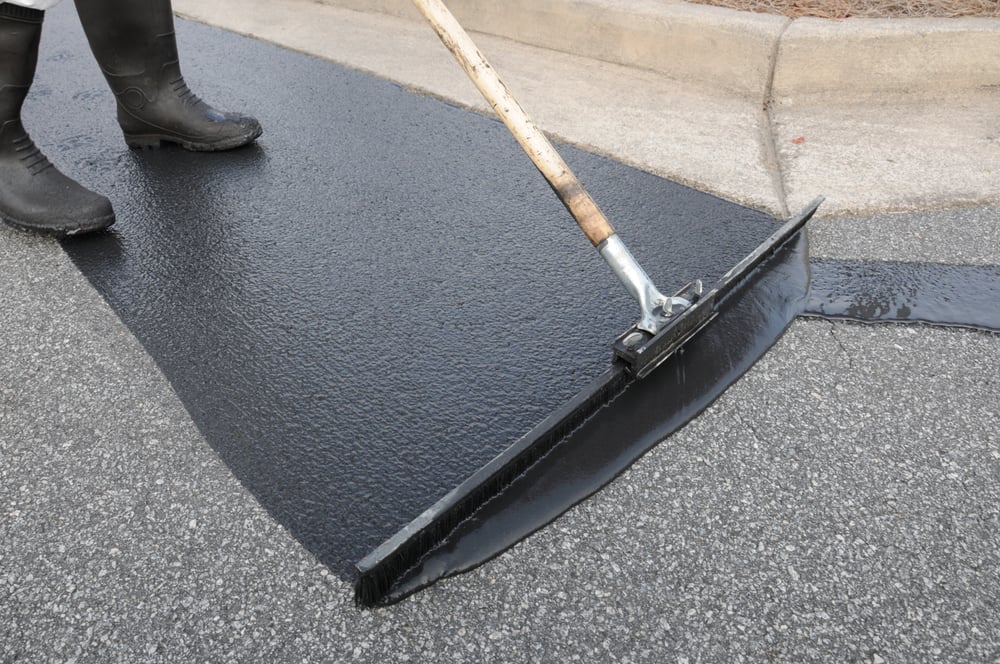
Commercial-grade sealer is applied by spray, squeegee, or brush depending on the area. For large open sections of a commercial lot, spray application provides consistent coverage and productivity. Edges, curb lines, and detail areas are typically brushed or squeegeed for precision.
Coverage rate matters. Sealer applied too thin provides inadequate protection. Sealer applied too thick builds up and becomes brittle. A professional contractor follows manufacturer specifications for coverage rate and applies the appropriate number of coats — typically two on commercial lots.

Step 4: Curing and Return to Service
Sealcoating requires adequate curing time before the lot can be returned to traffic. Under normal Bay Area conditions, most commercial sealers need 24 to 48 hours of cure time. Temperature and humidity affect curing — cooler, humid conditions extend the cure period, while warm, dry conditions accelerate it.
Plan the project for a period when the lot can be taken out of service, or work with your contractor to phase the application so portions of the lot remain operational.
Signs Your Parking Lot Is Due for Sealcoating
You do not always need to wait for the scheduled interval if your lot is showing visible signs of sealer wear. Look for:
- Faded gray color across large areas of the lot
- Surface porosity where the aggregate texture is clearly visible and open
- Water absorption rather than beading after rainfall
- Visible oxidation where the surface feels dry and rough underfoot
- Faded striping that indicates the sealer protecting the paint layer has worn away
Any of these signs mean the lot’s protective barrier has deteriorated and reapplication is warranted, regardless of when the last coat was applied.
Common Sealcoating Mistakes to Avoid
Sealcoating over cracks without sealing them first. This is the most common quality shortcut in the sealcoating industry. It looks good on the day of application and fails to provide meaningful protection. Always require crack sealing as part of the scope before sealer goes down.
Hiring based on price alone. Sealcoating is a competitive market and low-ball pricing almost always means diluted sealer, inadequate coverage rates, skipped surface preparation, or all of the above. The material cost of quality commercial sealer is significant, and proposals that come in dramatically below market are cutting corners somewhere.
Applying sealer in inappropriate conditions. Sealer should not be applied when surface temperatures are below 50°F, when rain is forecast within 24 hours, or when overnight temperatures will drop below freezing. Application in these conditions results in poor bonding and premature failure.
Skipping sealcoating entirely on the assumption it’s not necessary. Asphalt that is not protected from UV radiation and water infiltration deteriorates faster, requires more frequent crack sealing and pothole repair, and reaches the end of its serviceable life sooner. The cost of skipping sealcoating is always higher than the cost of the sealcoating itself.
Treating sealcoating as a repair. Property owners who skip maintenance for years and then expect a sealcoating application to restore a badly deteriorated lot will be disappointed. Sealcoating is a preventive treatment. It protects pavement that is in good condition — it cannot reverse deterioration that has already occurred.
What Does Commercial Sealcoating Cost in the Bay Area?
For commercial parking lots in the Bay Area, professional sealcoating typically runs $0.15 to $0.35 per square foot depending on lot size, surface condition, and the prep work required.
For context, here is how that looks across different lot sizes:
| Lot Size | Estimated Sealcoating Cost |
|---|---|
| 5,000 sq ft | $750 to $1,750 |
| 15,000 sq ft | $2,250 to $5,250 |
| 30,000 sq ft | $4,500 to $10,500 |
| 50,000 sq ft | $7,500 to $17,500 |
These figures assume standard preparation and two-coat application. Lots requiring significant crack sealing, oil spot treatment, or other prep work will be at the higher end of the range.
When you compare these numbers against the cost of resurfacing ($1.75 to $3.50 per square foot) or full replacement ($4.00 to $7.00 per square foot), the return on investment for a consistent sealcoating program becomes immediately clear.
Frequently Asked Questions
Does sealcoating actually extend pavement life?
Yes, meaningfully. Sealcoating slows UV oxidation, reduces water infiltration, and keeps the asphalt binder more flexible longer. Studies from the pavement industry consistently show that sealcoated pavements outlast unsealed ones by several years under equivalent traffic and conditions. The cumulative effect of regular sealcoating over a pavement’s lifetime can add five to ten years of service life compared to an unmaintained lot.
Can you sealcoat in the winter in the Bay Area?
Bay Area winters are mild enough to allow sealcoating through much of the season, but timing still matters. Sealer should not be applied when rain is forecast within 24 to 48 hours or when overnight temperatures will drop below 40°F. Fall application before the rainy season begins is ideal. Spring application after the rains end is the next best window.
How long does sealcoating take to dry?
Under typical Bay Area conditions, commercial sealcoating requires 24 to 48 hours before the lot can safely return to vehicle traffic. Foot traffic can typically resume after 4 to 6 hours. Cooler temperatures and higher humidity extend drying time. Your contractor should give you a specific return-to-service timeline based on the forecast conditions for your project.
Should I sealcoat or resurface my parking lot?
If your pavement is structurally sound with surface-level oxidation and minor cracking, sealcoating is the appropriate treatment. If the surface has significant cracking, widespread block cracking, or visible structural deterioration, resurfacing is the right scope. Sealcoating a lot that needs resurfacing delays the necessary work without addressing the underlying condition. [See our guide: 7 Signs Your Parking Lot Needs Resurfacing]
Does sealcoating fix cracks?
No. Sealcoating fills hairline surface cracks but does not seal cracks that are open enough to allow water infiltration. Cracks of any meaningful width need to be sealed with hot-pour rubberized crack sealant before sealcoating is applied. A contractor who proposes sealcoating without addressing visible cracks is cutting corners.
How do I know if my contractor is using quality sealer?
Ask for the product name and manufacturer specification sheet. Commercial-grade sealer should meet or exceed specifications from the Pavement Coatings Technology Council (PCTC) or equivalent industry standards. Avoid contractors who cannot identify the product they’re using or who offer vague answers about material quality. Diluted sealer is a common issue in the industry and a direct cause of premature failure.
Protect Your Pavement Investment — Schedule Sealcoating with Cato’s Paving
A consistent sealcoating program is one of the simplest and most cost-effective things you can do to extend the life of your commercial parking lot. The property owners who take it seriously spend significantly less on repairs and reconstruction over the life of their pavement than those who don’t.
At Cato’s Paving, we provide professional commercial sealcoating services to property managers, HOAs, retail centers, schools, and municipalities throughout the San Francisco Bay Area. We use commercial-grade materials, prepare surfaces properly, and apply sealer at the right coverage rate to deliver results that last.
Contact Cato’s Paving today to schedule your sealcoating project or request a free pavement assessment. We will tell you exactly what your lot needs and when it needs it.
📞(510) 397-2677
🌐catospaving.com
📧office@catospaving.com


Pingback: Asphalt Repair Methods: Which One Does Your Parking Lot Need?